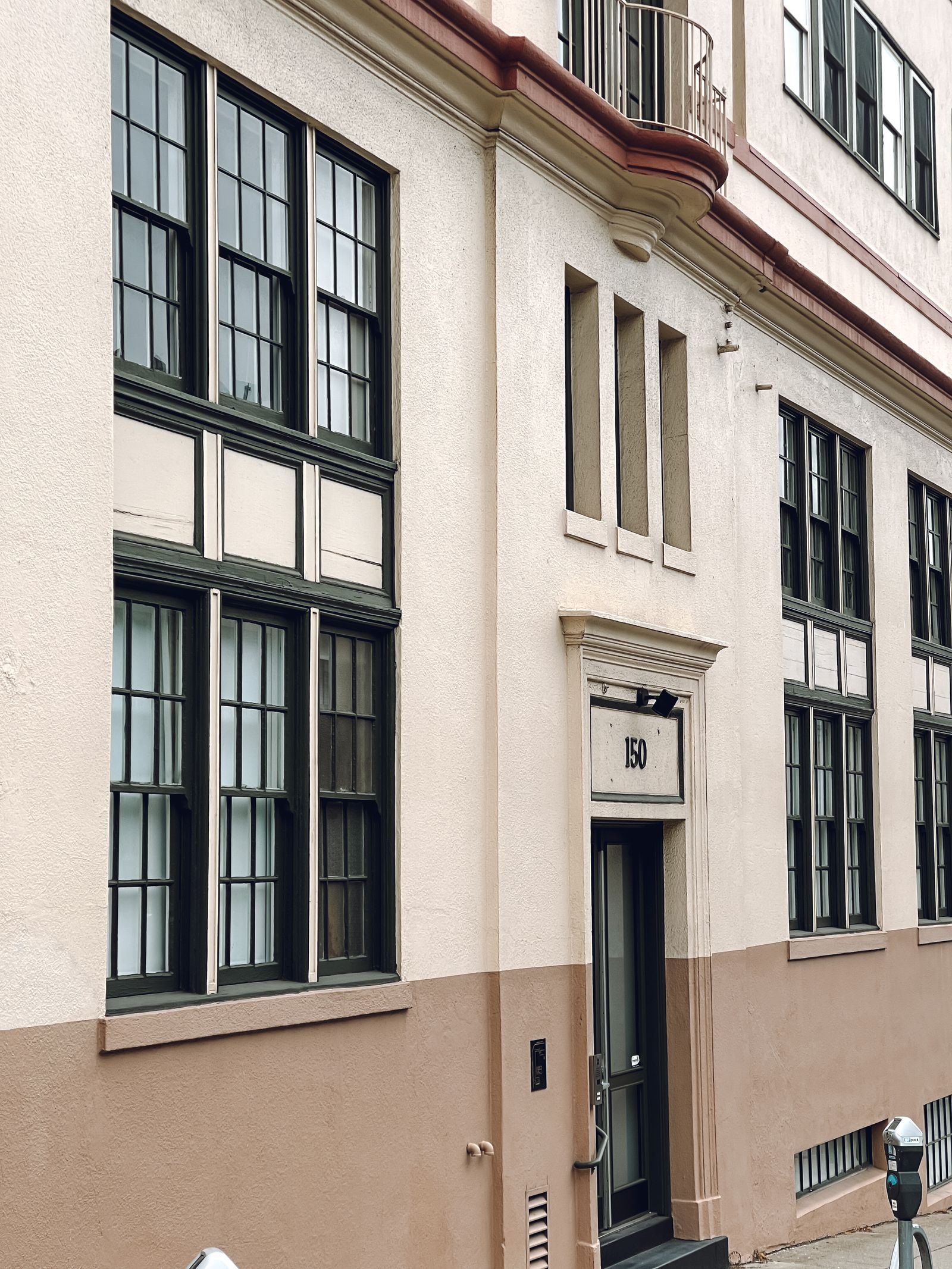
Read the New Haven facade before choosing a cleaning process
New Haven commercial buildings often combine historic brick, older mortar, cast stone, concrete, precast panels, glass, painted metal, EIFS, tile, awnings, and newer additions. A downtown storefront may put recessed entries and sidewalk traffic directly beside an older masonry wall. A Yale-area academic or medical building may add canopies, mechanical screens, emergency routes, and security controls. A Long Wharf warehouse may have metal siding, loading doors, broad elevations, salt film, and truck traffic. Those properties can all look dirty, but the visible mark may be organic growth, road film, soot, pollen, bird residue, salt, mineral deposit, oxidation, runoff, or a building defect.
A compatible soft-wash process uses chemistry, dwell, rinse control, and protection as a system. Lower pressure can reduce mechanical impact on some materials, but it does not make damaged mortar, loose paint, failed sealant, or porous stone suitable for an untested application. A useful field review separates routine cleaning from repointing, spall repair, flashing work, historic preservation, coating replacement, window restoration, and leak investigation. A representative test area can help a property team approve the likely result before a full elevation is scheduled.
- Separate brick, mortar, stone, concrete, glass, metal, painted, coated, and hardscape zones.
- Classify biological staining, road film, salt, minerals, soot, oxidation, and runoff separately.
- Define the desired finish and remaining limitations before approving chemistry or pressure.
- Keep repairs, unstable trim, open joints, leaks, and preservation work outside routine washing.
Account for New Haven roads, neighborhoods, and exposure
The same cleaning plan will not behave the same way in every New Haven setting. A facade along Chapel Street, Church Street, or Route 34 may collect vehicle film, soot, splashback, and pedestrian residue at the lower wall. Wooster Square and East Rock properties can have mature trees, shaded elevations, older masonry, tight sidewalks, and leaf or pollen accumulation. Westville storefronts may need work around customer parking, neighborhood traffic, signs, and awnings. Long Wharf and Quinnipiac Avenue properties can see more open wind, salt-laden air, industrial dust, loading activity, and broad pavement that changes both access and runoff.
The proposal should map elevations rather than treat the building as a square-foot total. Lower walls beside I-91, I-95, Route 1, or Route 34 may need a different treatment from sheltered upper walls. Yale, hospital, laboratory, and office buildings may have air intakes, sensitive equipment, security perimeters, and public routes close to the facade. A retail or restaurant property may need the most visible entrance completed outside customer peaks. Those local details shape the order, protection, water use, and handback standard.
Plan wash water around rivers, drains, and Long Island Sound
New Haven's water path deserves attention before any wall is wetted. A site may drain toward a curb inlet, catch basin, parking-lot drain, basement stair, loading ramp, planted bed, Mill River, West River, Quinnipiac River, or the Long Island Sound shoreline. Soil loosened from a facade can travel farther than the operator expects, especially on a sloped lot or during a changing tide or rain event. A storm drain is not an automatic authorization for used wash water. The property and contractor should agree on the discharge approach for the actual chemistry, rinse volume, soil load, and receiving path.
Protection may involve drain covers or diversion, containment, recovery, filtration, reduced rinse volume, plant protection, controlled sequencing, or coordination with the responsible site or authority. The work plan should also protect basement doors, garage ramps, parked vehicles, landscaping, waterfront edges, and neighboring businesses. A closeout should confirm that entrances are safe, visible residue is documented, and remaining mineral, oxidation, or repair conditions are identified instead of being concealed by a stronger rinse.
Keep Yale, healthcare, retail, and industrial sites usable
New Haven's commercial cleaning work often happens beside people who cannot simply leave the property. Yale academic and administrative buildings bring class changes, research schedules, deliveries, events, and controlled access. Yale New Haven Hospital, Saint Raphael Campus, outpatient clinics, and medical offices need patient drop-off, ambulance, accessible, visitor, and staff routes protected. Downtown offices, restaurants, hotels, and shops have employee arrivals, guest movement, food service, and public sidewalks. Long Wharf and Science Park properties can add trucks, loading windows, badges, equipment, and shift changes.
Before pricing, identify operating hours, the person authorized to pause work, air intakes, emergency paths, outdoor seating, deliveries, security requirements, events, tenant notices, and accessible-route needs. A project may phase the Chapel Street side before opening, work a hospital elevation during a quiet window, or clean one campus building at a time. Barriers, hose routing, spotters, communications, stop conditions, and a dry handback are part of a professional scope. Occupied-site planning is not an afterthought; it determines whether the approved method can actually be used.
Build coastal Connecticut weather into the schedule
New Haven's humid summers, spring pollen, coastal wind, rain, autumn leaf debris, snow, ice, and freeze-thaw cycles all affect facade cleaning. Deicing residue can gather at curb lines, garage entrances, ramps, parking decks, loading areas, and sidewalks. North-facing or shaded walls can stay damp longer than a sun-facing elevation. Wind-driven rain can mark parapets and window heads, while heat and direct sun can change dwell and drying on a south or west wall. A property should decide whether it wants a broad maintenance improvement, a visible entrance reset, or a detailed finish that needs more contact work and time.
Rain, lightning, gusts, fog, freezing conditions, poor visibility, wet pedestrian paths, and slick hose routes can require a pause for either ground or aerial work. Cold water and masonry can change the timing of a rinse; a sudden shower can move loosened soil onto a completed zone. The quote should state weather limits, rescheduling rules, protection for vulnerable materials, and the dry inspection used after work resumes. A realistic weather plan protects the appearance result and the building users at the same time.
Match aerial assistance, lifts, poles, and hand detail to each elevation
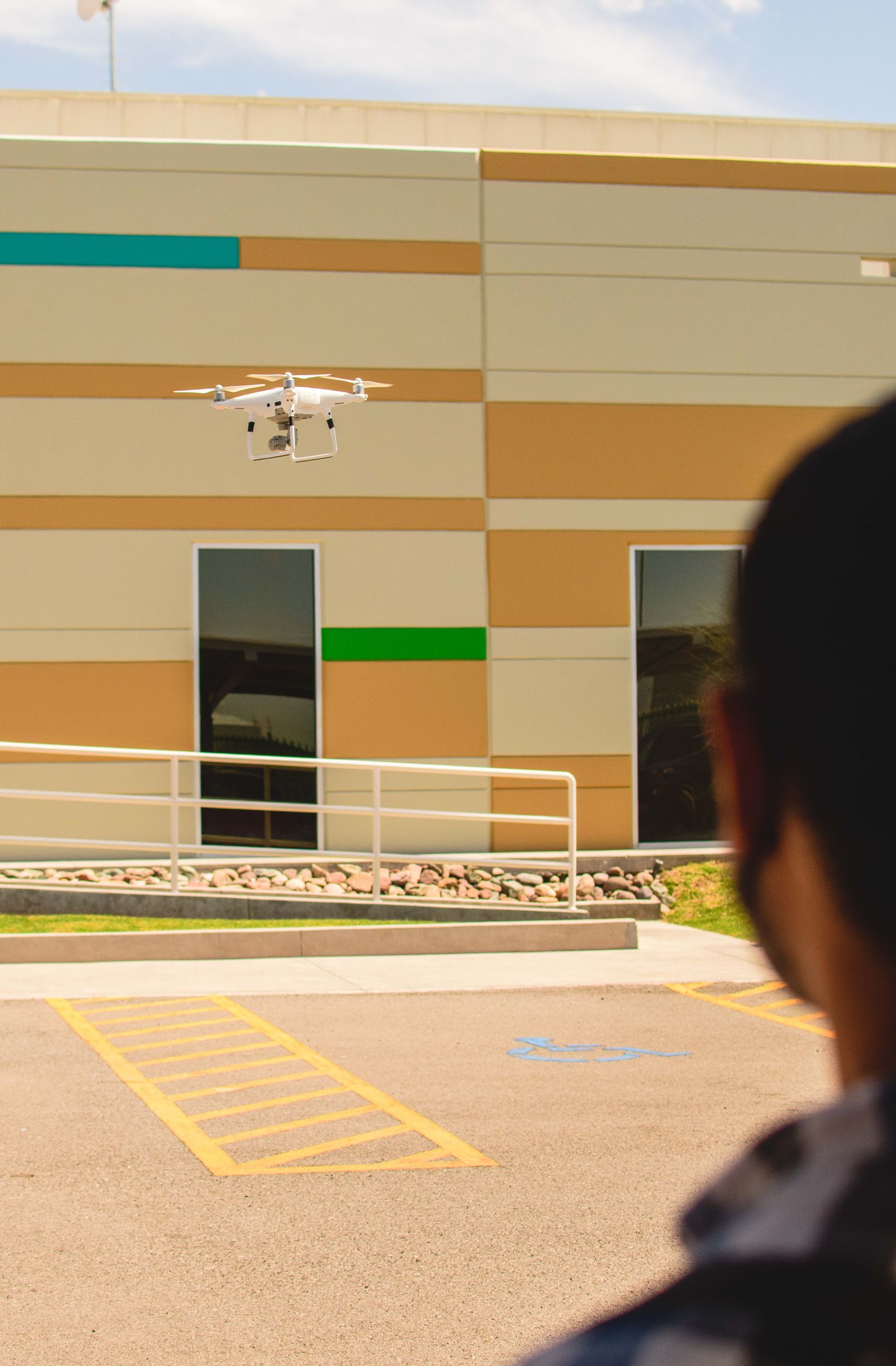
Drone-assisted wetting or rinsing may help with a broad, compatible upper wall, parapet, ledge, or roofline zone when there is enough stand-off distance, line of sight, launch space, water supply, public separation, and manageable wind. An open Science Park or industrial elevation may be more workable than a narrow downtown block with wires, trees, traffic, balconies, and active sidewalks. Yale or hospital property controls, events, security, and sensitive operations may also change the plan. Aerial access is one tool, not a guarantee that every New Haven building can be cleaned from the air.
Windows, frames, signs, awnings, cornices, canopies, balconies, and stubborn deposits may need a pole, lift, brush, squeegee, or hand-detail crew. A drone cannot repair mortar, scrape a bonded mineral deposit, inspect a joint by touch, or provide a true squeegee finish. Commercial drone work must comply with applicable Federal Aviation Administration requirements, and property permission does not replace aviation rules. A clear proposal identifies aerial, ground, lift, pole, and hand-detail zones, plus the fallback method if wind, airspace, traffic, or finish requirements change.
Request a New Haven quote based on the actual property
A useful commercial soft-washing proposal should list target elevations, materials, visible deposits, access by zone, operating restrictions, weather limits, water assumptions, drainage controls, protection measures, expected finish, exclusions, and closeout documentation. It should separate facade washing from high-detail glass, mineral or salt treatment, soot, oxidation, canopies, roofline details, post-construction residue, and masonry repair. If aerial assistance is proposed, the scope should say where it is expected to help and what alternative applies when the site cannot support it.
Send the New Haven address, wide and close photos, approximate height, known materials, priority elevations, visible concerns, preferred dates, water access, nearby drains, parking or loading limits, and requirements involving patients, students, researchers, guests, tenants, employees, deliveries, traffic, security, or historic details. We can discuss a one-time appearance improvement, a phased campus or hospital project, retail or office maintenance, industrial facade cleaning, or recurring exterior care. Call +1 239-351-2897, email contact@dronebuildingcleaners.com, or use the quote form to begin.