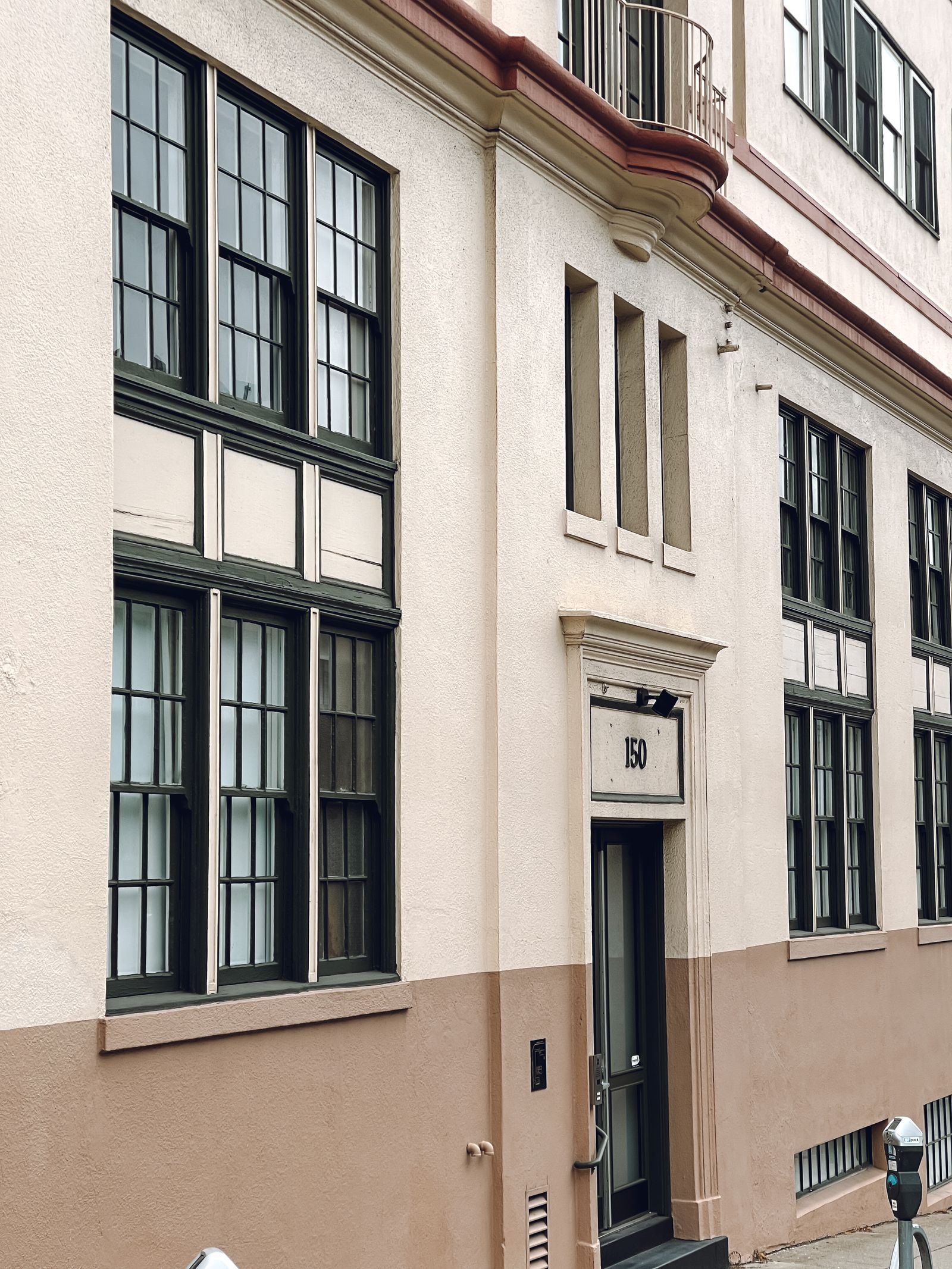
Soft washing starts with the New Haven material and deposit
Soft washing generally relies more on compatible chemistry, dwell time, and controlled rinsing than on impact force. It may fit selected brick, painted concrete, compatible stucco, EIFS, and similar surfaces affected by algae, mildew-like growth, pollen, bird residue, or atmospheric film. Lower pressure can reduce some mechanical stress, but chemistry, concentration, dwell, temperature, wind, overspray, plant protection, glazing protection, and joint condition still matter. On a Downtown or Wooster Square building, a test area can show how older mortar, repairs, coatings, and exposure respond before the full facade is attempted.
New Haven's visible darkening is not always biological. Lower walls along I-91, I-95, Route 34, Whalley Avenue, or busy downtown streets may carry soot, traffic film, splashback, salt, and sand. Riverfront or coastal elevations may show mineral residue, windblown soil, or corrosion. A proposal should define whether the desired outcome is recurring organic-growth maintenance, a broad atmospheric-film improvement, a winter-residue reset, or a more detailed restoration result. It should also state what may remain and which deposits need specialty treatment, hand work, or another professional.
Pressure washing has a role on selected durable New Haven zones
Controlled pressure may fit sound concrete sidewalks, loading aprons, garage floors, parking decks, service yards, dumpster pads, ramps, and other durable hardscape when force, nozzle, distance, flow, adjacent finishes, and drainage are reviewed. It can provide mechanical help where chemistry alone will not release a deposit. But pressure should not become the default for a mixed facade. Excessive force can erode older mortar, strip paint, etch soft stone, disturb a brick face, open a joint, or drive water behind a coating. A machine's advertised power does not establish that a building surface can tolerate it.
The operating setting matters as much as the substrate. A pressure rinse near a hospital drop-off, Yale pedestrian route, restaurant entrance, or busy Chapel Street storefront may create more splash, noise, overspray, hose management, and public-control requirements than a soft-wash sequence. A loading area near Long Wharf may tolerate a different setup but have heavier soil and more complex discharge. Ask where pressure is proposed, why that material can tolerate it, what test is required, and how the dry finish and surrounding areas will be checked.
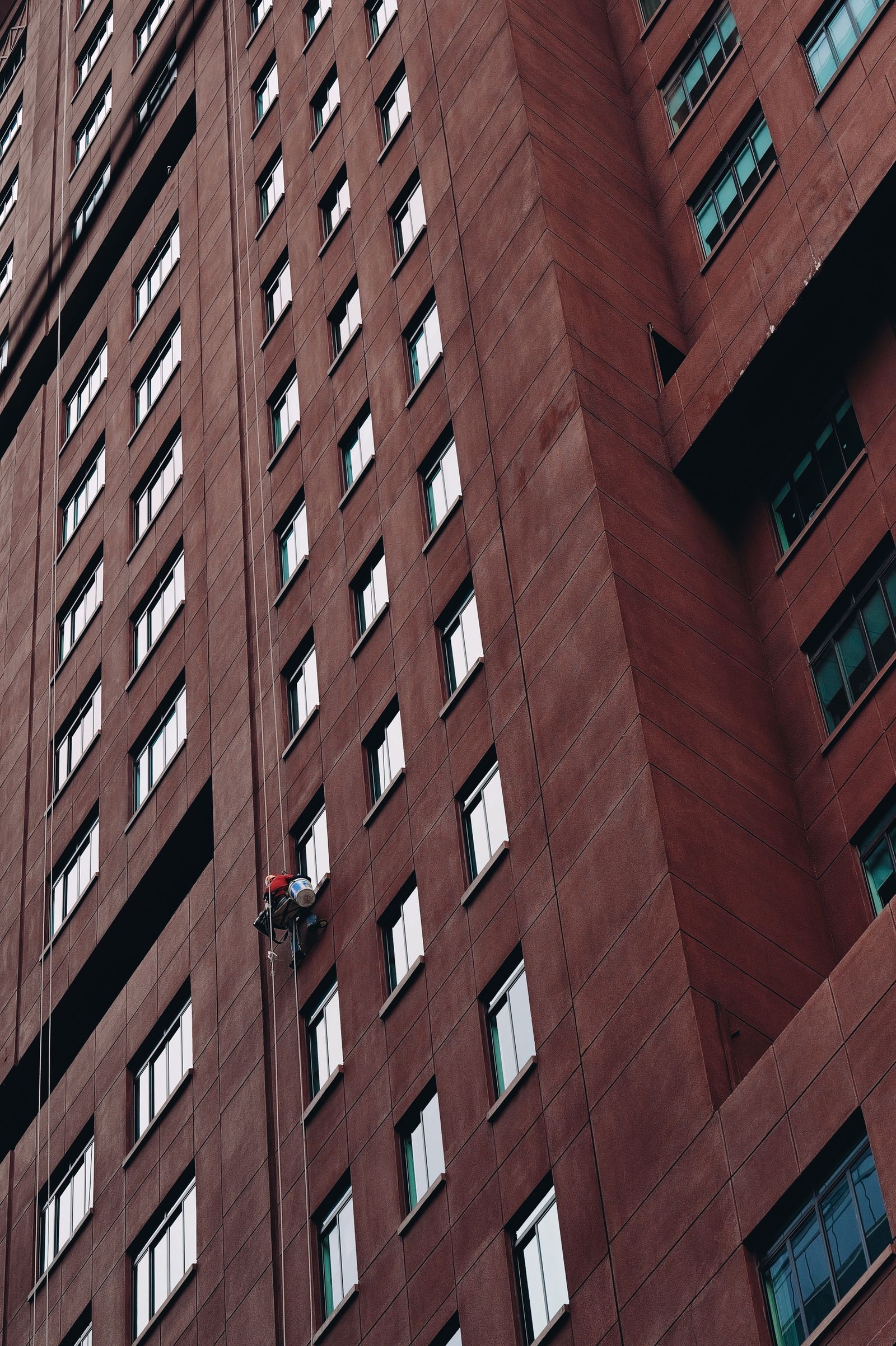
Compare methods against coastal weather and winter residue
New Haven's coastal humidity, spring pollen, summer heat, autumn leaves, nor'easters, snow, road salt, and freeze-thaw cycles change both cleaning and resoiling. Salt and grit concentrate around curbs, garage entrances, parking decks, ramps, loading docks, and sidewalks. Shaded walls near East Rock or tree-lined residential-commercial streets may stay damp longer, while exposed Long Wharf walls can dry with wind-driven unevenness. Direct sun can shorten dwell and create visual differences across a large elevation. A method comparison should include the finish standard and the date window, not just the equipment category.
Rain, lightning, wind, fog, freezing temperatures, poor visibility, and slippery routes can stop either method. A storm can move loosened soil across a completed zone, and cold conditions can leave water in vulnerable joints or make a public path unsafe. For an occupied Yale, hospital, hotel, or office property, the schedule should include weather pause triggers, rescheduling rules, protection, and a dry review. The method that looks efficient on a calm day may be the wrong choice when the site cannot be kept controlled and usable.
Treat access as a separate decision from cleaning chemistry
A New Haven building may need different access tools on different elevations. A ground crew can soft wash a lower wall, a water-fed pole can address selected glazing, a lift can provide contact detail, and aerial assistance may support a broad upper zone. Drone-assisted wetting or rinsing depends on stand-off distance, line of sight, launch space, wind, airspace, water supply, and a controlled ground area. Tight downtown streets, utility wires, mature trees, balconies, hospital controls, campus events, and active loading can make a seemingly open facade unsuitable for aerial work.
A drone cannot squeegee, brush a recess, scrape a bonded mineral deposit, repair mortar, feel loose material, or polish a window. Direct contact may still be needed at entries, frames, signs, cornices, canopies, balconies, and lower salt-marked areas. Commercial drone work must follow FAA requirements and any required authorization. Ask a bidder to map aerial, lift, pole, hand-detail, and excluded zones, and to state the fallback method if the weather, airspace, public movement, or finish requirement changes.
Make drainage and occupied-site controls part of the comparison
Water should be tracked from the facade to the receiving point. New Haven sites may drain toward curb inlets, catch basins, basement doors, garage ramps, planted beds, parking-lot drains, the Mill River, the West River, the Quinnipiac River, or the shoreline. Used water can carry loosened soil and product farther than expected. A visible storm drain is not automatic permission to discharge. The property and contractor should agree on diversion, containment, recovery, filtration, reduced rinse volume, disposal, or other controls suited to the actual site and activity.
The public and building systems need a method-specific protection plan. Identify accessible routes, patient and visitor movement, student paths, tenant entrances, outdoor dining, parked vehicles, air intakes, emergency access, delivery windows, security boundaries, and who may stop the work. Pressure, chemistry, hoses, and aerial equipment create different controls, but all require barriers, communications, spotters where appropriate, and a clear handback. A quote that only compares price per square foot leaves out the details that determine whether the project is workable.
- Require an elevation-specific material review, test-area plan, and expected finish.
- Separate maintenance cleaning from restoration, repairs, glass detail, mineral treatment, and coatings.
- Review roads, winter residue, coastal exposure, people, airspace, drainage, and public-route controls.
- Request closeout photos and notes about remaining deposits or recommended repairs.
Use a New Haven-specific bid checklist
Ask each bidder to describe the material and soil assumptions, proposed method by elevation, test-area process, chemistry and pressure controls, access equipment, weather limits, water source, drainage approach, landscaping and equipment protection, public controls, work hours, closeout photos, and exclusions. A credible proposal distinguishes routine washing from glass restoration, salt or mineral treatment, oxidation, soot, post-construction residue, graffiti, masonry repair, and envelope investigation. It should also explain whether aerial assistance is proposed and what happens if the site cannot support it.
For New Haven offices, hospitals, Yale-area facilities, laboratories, retail centers, hotels, industrial properties, and campuses, send the address, photographs, approximate height, materials, priority elevations, visible concerns, water access, drain locations, preferred dates, and operating restrictions. Mention orientation near Route 34 or I-91, Long Wharf exposure, river-adjacent drainage, hospital drop-off, campus events, loading schedules, outdoor seating, security, or historic details when relevant. Compare the proposed finish and controls, not simply the lowest number.
Get a method recommendation tied to your property
Soft washing may be a strong starting point for compatible organic staining, pollen, bird residue, and atmospheric film on selected facade materials. Controlled pressure may suit sound hardscape or another tested durable zone. Rinsing, pole work, lift access, hand detail, specialty treatment, or preservation-oriented restoration may be needed elsewhere. The strongest plan often combines methods because a New Haven property is a collection of materials, exposures, and operating zones rather than one uniform surface. A test area can confirm appearance and protection before the full scope is approved.
Drone Building Cleaners can review New Haven hospitals, Yale and university buildings, laboratories, offices, hotels, restaurants, retail centers, schools, warehouses, garages, campuses, mixed-use properties, and industrial exteriors. We can discuss facade washing, upper wetting and rinsing, ledges, canopies, parapets, roofline details, and recurring maintenance while identifying areas that need contact work or another specialist. Call +1 239-351-2897, email contact@dronebuildingcleaners.com, or submit the quote form with the New Haven property details.